
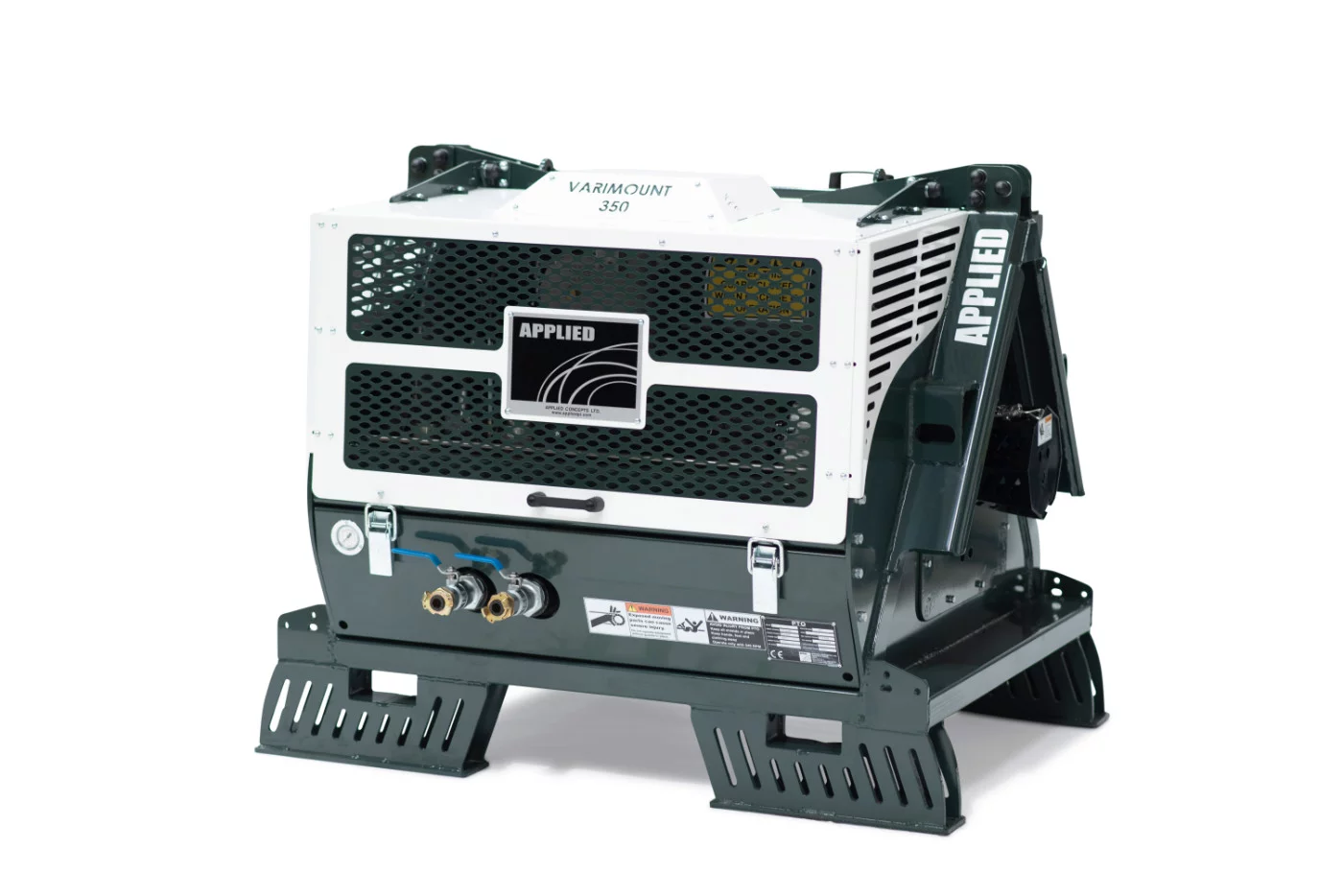
How to Choose the Correct Compressor for You
Compressor & Nozzle Selection in Sand Blasting Operations
Choosing the correct compressor and nozzle combination is a critical requirement for successful blasting operations.
Understanding the Relationship Between CFM, PSI, and Nozzle Size
In sandblasting, performance is driven more by continuous, high-volume airflow (CFM) than by maximum pressure (PSI). A blast machine is essentially a large pneumatic tool where the blast nozzle acts as an intentional leak. To maintain an optimal working pressure—typically between 90 and 100 PSI—the compressor must supply air faster than it escapes through the nozzle orifice [2].
If a compressor is undersized, the system will suffer from pressure drops giving a pulsing blast media stream resulting in significantly reduced cutting speed. Conversely, if an operator attempts to compensate for a small compressor by running at higher pressures without adequate CFM, the system will simply waste abrasive media while failing to maintain a consistent blast pattern.
Matching Nozzle Sizes to Compressor Capacities
To illustrate how compressor output dictates nozzle selection, we can examine four specific compressor capacities: 105 CFM, 175 CFM, 268 CFM, and 350 CFM. Each capacity aligns with specific nozzle sizes and operational scales.
105 CFM: Small to Medium Applications
A compressor delivering 105 CFM is typically suited for light to medium-duty operations. At an optimal blasting pressure of 90 to 100 PSI, a 105 CFM compressor can comfortably support a No. 4 ¼” or 6mm blast nozzle, which requires approximately 90 to 103 CFM.
This setup is ideal for auto-body shops, small fabrication facilities, and general outdoor touch-ups. However, because the compressor is running near its maximum capacity to support a 1/4-inch nozzle, there is little margin for nozzle wear. As the nozzle wears out and the orifice expands, the CFM requirement will quickly exceed 105 CFM, leading to a drop in pressure and efficiency. Operators using a 105 CFM unit must diligently monitor nozzle wear and replace them frequently, or step down to a No. 3 3/16” or 4.5mm nozzle, which demands around 50 to 60 CFM, providing a comfortable safety margin.
175 CFM: General Industrial and Field Work
Stepping up to a 175 CFM compressor opens the door to more robust industrial applications. This capacity is perfectly matched for a No. 5 5/16” or 8mm nozzle, which consumes roughly 130 to 150 CFM at 90 to 100 PSI.
This combination is a staple for mobile blasting contractors and medium-scale industrial preparation, such as cleaning structural steel or preparing equipment for powder coating. The 175 CFM capacity provides enough overhead to account for long hose runs, the operation of a high-pressure breathing air respirator (which typically requires an additional 20 to 25 CFM), and moderate nozzle wear.
268 CFM: Heavy-Duty Surface Preparation
For heavy-duty, high-production environments, a 268 CFM compressor provides substantial power. This unit can effortlessly drive a No. 6, 3/8” or 9.5 nozzle, which requires between 190 and 230 CFM at 100 PSI [4].
A 3/8-inch nozzle significantly increases the blast pattern size and media flow rate, drastically reducing the time required to complete large jobs like ship hull preparation, bridge maintenance, or large tank restoration. The 268 CFM compressor ensures that the pressure remains stable even when utilizing long blast hoses across large work sites, and it easily accommodates the air demands of safety equipment and moisture control systems.
350 CFM: Maximum Output and Efficiency
At the top tier of standard portable blasting setups, a 350 CFM compressor is designed for maximum production rates. It is ideally paired with a No. 7, 7/16” or 11mm nozzle, which demands approximately 285 to 312 CFM at 100 PSI.
With a 350 CFM compressor, contractors can tackle the most demanding projects, rapidly stripping heavy mill scale, thick industrial coatings, or severe corrosion. The high volume of air allows for the use of larger abrasive media and ensures that the blast stream remains powerful and consistent. This setup maximizes labor efficiency; while the equipment and fuel costs are higher, the drastic reduction in man-hours required to complete a job often makes this the most profitable configuration for large-scale contractors.
The Cost of Mismatching Equipment
Failing to properly match the compressor and nozzle can lead to severe operational inefficiencies. An undersized compressor will cause the abrasive stream to surge, wasting expensive media and increasing labor time. It can also lead to excessive moisture buildup in the air lines, as the compressor runs continuously without cycling, causing it to run hot and overwhelm moisture separators.
On the other hand, while an oversized compressor will not negatively impact the blasting process, it represents an unnecessary capital expense and wastes fuel or electricity.
Conclusion
In sandblasting, the air compressor and the blast nozzle must are inextricably linked. By carefully evaluating the required production rates and understanding the CFM demands of specific nozzle sizes whether utilizing a 105 CFM unit for precision work or a 350 CFM powerhouse for heavy industrial stripping, blast machine operators can ensure consistent pressure, minimize media waste, and maximize profitability.
Although compressor output and nozzle size are extremely important to the success of blasting operations, they are not the only aspects which need attention. Job site layout, hose type & length, safety equipment such as air filters & respirators and the inevitable wear on nozzles all have significant effects which need to be taken into consideration when trying to set up and optimize your blasting operation.